
Stylish and functional home workspaces balance aesthetics with practicality, especially for designers who rely on both visual clarity and ergonomic comfort. Begin by defining purpose: conceptual development, client presentations, sketching, digital work, or mixed media. A clear brief guides layout decisions, influence lighting choices, and determine necessary storage. Prioritize flexible zones for focused work, collaborative critique, and relaxation, allowing the space to adapt with projects, tools, and workflow shifts. Incorporate durable surfaces, modular furniture, and cable management to keep surfaces uncluttered while showcasing a refined design identity that supports creativity daily. Use a cohesive color palette to calm focus and inspire.
Spatial planning starts with the desk, the center of any designer’s workflow. Choose a height-adjustable desk to alternate sitting and standing, which improves posture and energy. Position the desk near a natural light source but avoid direct glare on screens. Use task lighting with adjustable color temperature to match activity, warmer tones for relaxing review and cooler tones for precise color work. Create distinct storage zones for reference materials, fabric swatches, samples, and tech peripherals, using labeled drawers, open shelving, and portable carts to maintain order without sacrificing accessibility during intense design sprints. Reserve wall space for mood boards.
Lighting defines perception and mood, crucial for accurate color evaluation. Layer ambient, task, and accent lights to control atmosphere and highlight focal surfaces. Select bulbs with high CRI for faithful color rendering, especially when working with palettes or printed proofs. Combine matte and reflective materials to balance glare and texture. Natural materials like wood, stone, and woven textiles add warmth while polished metals and glass provide modern accents. Choose a restrained color scheme with two dominant neutrals and one accent color to frame work without overwhelming visual decisions. Test finishes in situ at different times of day before committing permanently.
Ergonomics matters for long design sessions; invest in a supportive chair, adjustable monitor arms, and keyboard trays to reduce strain. Align monitors at eye level and keep keyboards positioned for neutral wrists. For multi-screen setups, consider curved or vertically adjustable displays to improve reference visibility. Integrate reliable backup power, surge protection, and high-speed internet to sustain deadlines. Use wireless peripherals where possible for tidier surfaces, but maintain dedicated hubs and chargers for frequent devices. Calibrate monitors regularly and keep color profiles documented for consistent client presentations. Pair ergonomic equipment with microbreak reminders and posture cues to protect health and workflows.
Thoughtful storage preserves creativity by making materials discoverable. Combine closed cabinetry to hide clutter with open display surfaces for ongoing projects and inspirational objects. Use modular bins, clear boxes, and labeled folders to speed retrieval. Vertical pegboards, magnetic rails, and slatwalls free desk space and keep frequently used tools visible. Employ rolling carts to transfer supplies between zones and collapsible containers for spare seating when clients visit. Archive finished work digitally and physically, maintaining a minimal portfolio rotation to prevent accumulation. Consider climate-controlled storage for delicate materials and digitize samples for remote sharing with seamless metadata tagging to enhance findability.
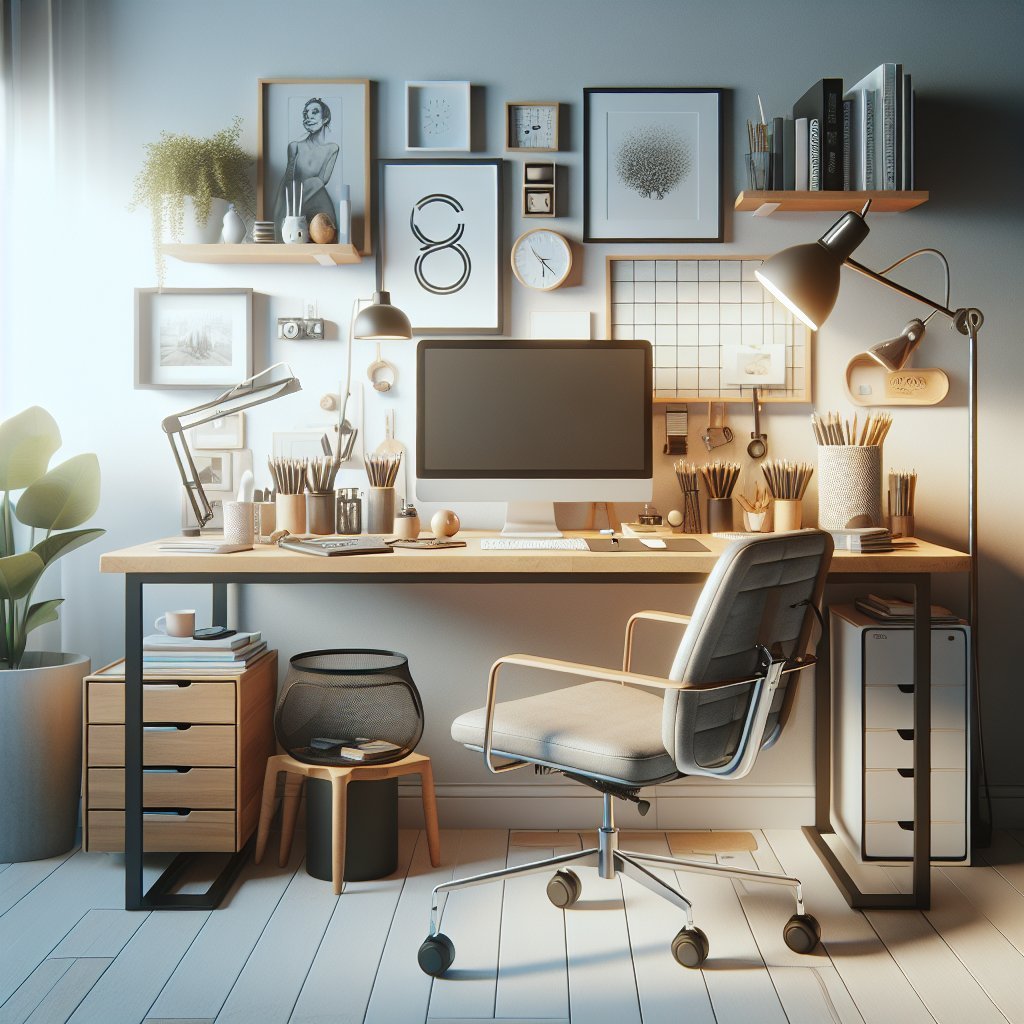
Personalization should inspire without distracting from deadlines. Curate a small number of meaningful objects, artworks, or plants to humanize the workspace. Plants improve air quality, add texture, and reduce stress; choose low-maintenance species for busy schedules. Maintain a brand corner with swatches, printed case studies, and business cards for client showings. Rotate mood boards and tactile samples seasonally to reflect current projects while signaling freshness. Keep navigation simple for visitors, using clear signage, a welcoming seating spot, and analog calendars for quick scheduling. Prioritize acoustics with rugs, panels, and soft furnishings to minimize echo during critiques and calls. Scale personalization.
Design workflows benefit from visible rituals. Create morning setup rituals to boot tools, clear surfaces, and review priorities. Use project management tools integrated with calendar blocks to protect deep work time. Set visual timers, do not disturb signals, and indicator lights for recording or intensive design phases. Arrange a quick critique corner with movable seating where peers can review work without invading primary production zones. Keep easily accessible prototype tools and maintain a habit of nightly reset to avoid decision fatigue the next day. Automate repetitive tasks with scripts, templates, and macros to reclaim creative time. Track metrics for iteration.
Sustainable design choices reduce waste and communicate responsible values. Source reclaimed wood, low-VOC paints, and recycled textiles to lower environmental impact. Opt for modular components that can be repaired or upgraded rather than replaced. Choose energy-efficient appliances, LED lighting, and smart power strips that cut standby consumption. Maintain durable finishes to extend lifespan, and design for disassembly so materials can be sorted at end of life. Communicate sustainability choices in proposals and studio tours to align clients with your values. Use local suppliers when possible to reduce transport emissions and support craft economies. Document sourcing and material data for transparency.
Redundancy protects delivery schedules. Maintain an automated backup system with cloud and local copies of important files, backups of assets, and version control for collaborative projects. Test restores periodically to confirm integrity. Keep spare critical hardware like routers, chargers, and external drives ready, and document system setups for fast recovery. Standardize file naming and folder hierarchies to speed handoffs. Invest in secure remote access and encrypted storage for client confidentiality. Train collaborators on protocols and maintain shared templates for efficient onboarding. Set predictable delivery checkpoints and contingency plans to protect reputation during high pressure launches. Review and update systems quarterly.
Balance form and function by choosing timeless furnishings accented with trend pieces that are easy to swap. Keep a neutral foundation and introduce color through textiles, art, and accessories that reflect current briefs. Design for change: modular partitions, mobile storage, and multiuse furniture allow the studio to evolve. Prioritize surfaces that resist staining and scratch, and choose finishes that age gracefully. Keep client touchpoints elegant and professional, from desk presentations to virtual meeting backgrounds. Invest in comfortable hospitality elements for long reviews, and schedule routine maintenance to preserve polish. Document spatial systems and preferences so replacements match expectations and continuity.