
Assessing Space and Defining Your Work Zone Start by measuring the dimensions of your small room and sketching a simple floor plan. Identify natural light sources, power outlets, and any architectural quirks such as alcoves or sloped ceilings. Choose one primary wall or corner as your dedicated work zone; this helps visually contain office clutter and keeps the rest of the room feeling open. Avoid spreading office items across multiple areas, which makes a small space feel chaotic and less functional.
Choosing the Right Desk for a Small Room A compact desk is essential when creating an organized home office workspace in a small room. Look for a shallow-depth desk (18–24 inches) that fits along your chosen wall without obstructing pathways. Wall-mounted floating desks or ladder-style desks save floor space and can be visually lighter than bulky furniture. If you need extra storage, choose a desk with built-in drawers, a hutch, or side shelves rather than adding separate storage units that crowd the room.
Optimizing Ergonomics Without Bulky Furniture Even in tight quarters, ergonomics matter for comfort and productivity. Select a slim office chair with proper lumbar support that can slide completely under the desk when not in use. If floor space is extremely limited, consider an armless chair or a kneeling chair, but ensure it supports neutral posture. Position your monitor at eye level by using a monitor arm or riser, and keep the top of the screen at or slightly below eye height to reduce neck strain.
Vertical Storage: Using Walls to Stay Organized Maximize vertical storage to keep surfaces clear and your home office workspace feeling open. Install floating shelves above the desk for books, reference materials, and decor. Use wall-mounted file holders, pegboards, or rail systems with hooks and baskets to store supplies, headphones, or cables. This approach takes advantage of underused wall space and keeps frequently used items within arm’s reach without crowding your desktop or floor area.
Smart Use of Corners and Nooks Corners often become dead space in small rooms, but they can be transformed into highly functional work areas. A corner desk or an L-shaped configuration can create extra surface area for writing, a second monitor, or a printer. If the room has an awkward nook, custom or DIY shelving can turn it into a mini storage closet for files and office supplies, freeing up the main workspace for essential daily tasks.
Cable Management for a Clutter-Free Look Managing cables is one of the simplest ways to make a small home office look more organized. Use cable clips, adhesive cord channels, or under-desk trays to route cords along the back of the desk or walls. Label chargers and power cords with tags or washi tape to quickly identify them. Opt for wireless peripherals when possible, such as a wireless keyboard and mouse, to reduce the number of visible cables and free more desk space.
Decluttering and Curating Only Essentials In a small home office workspace, every item must earn its place. Begin by removing everything from the desk and storage areas, then only put back what you use weekly or daily. Store rarely used documents in digital format when feasible by scanning and archiving them securely. Limit desk accessories to a few high-impact tools—a pen cup, notepad, and task light—so your work surface stays clear for focused tasks and projects.
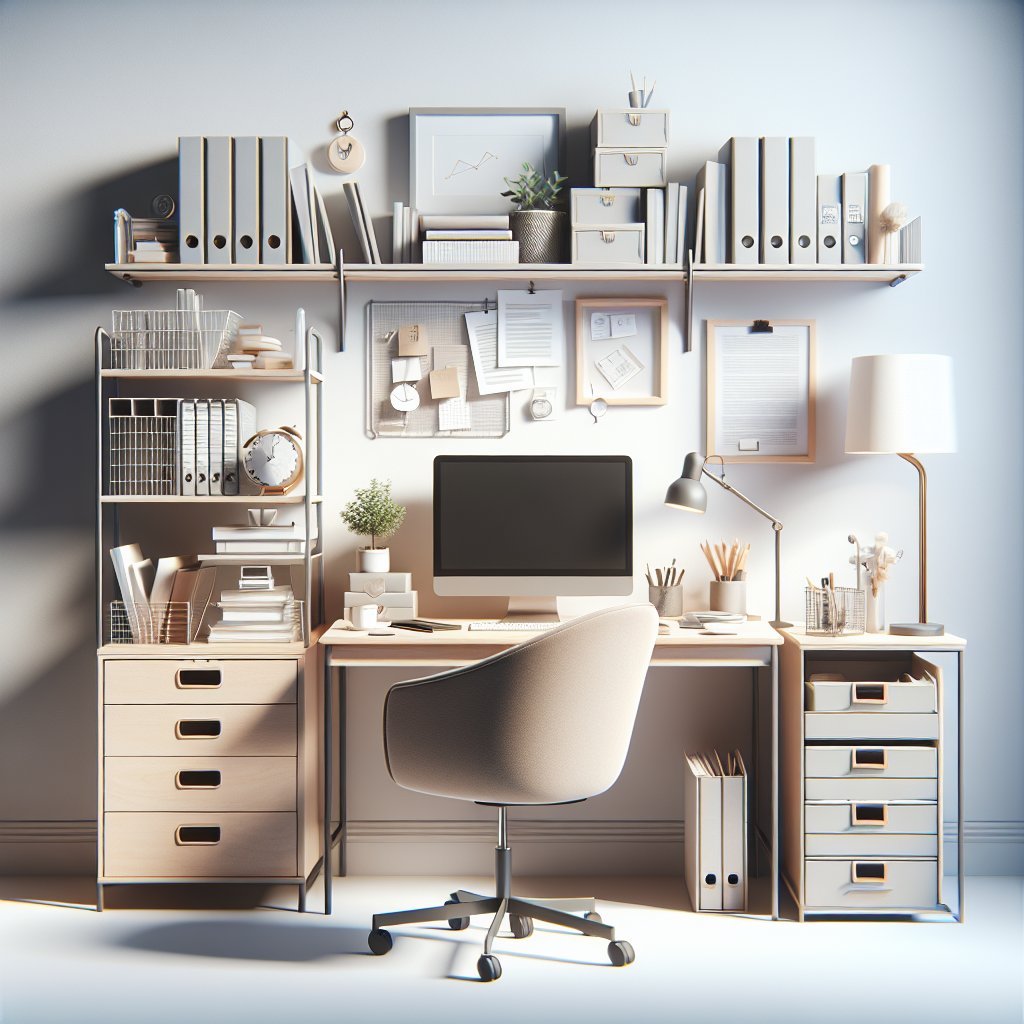
Zoning for Work, Storage, and Reference Materials Create micro-zones within your home office to stay organized. The primary zone is your immediate desktop, reserved for your computer and current project materials. A secondary zone can be a nearby shelf, rolling cart, or drawer unit holding supplies like paper, pens, and tech accessories. A third zone might store archives, reference books, or personal items you need less frequently. Clear boundaries between zones reduce clutter buildup and make it easier to maintain order.
Lighting Strategies in a Small Office Space Good lighting is essential for productivity and eye comfort in a compact workspace. Position your desk perpendicular to a window if possible to avoid screen glare while still enjoying natural light. Add a focused LED task lamp with adjustable brightness and color temperature to support both daytime work and late-night sessions. Use wall sconces or clip-on lights instead of floor lamps to save floor space and keep the room feeling airy and bright.
Incorporating Multi-Functional Furniture In a small room, furniture often needs to serve multiple purposes. A storage ottoman can act as seating for visitors, a footrest, and a place to store files or tech gear. A fold-out desk can double as a console table when closed, keeping the room flexible for non-work activities. Consider a printer stand with drawers or shelves to consolidate printing supplies, or a bookcase that also houses decorative boxes for neatly concealed office essentials.
Designing a Visual System for Paper and Files Paper clutter quickly overwhelms a small office if it is not controlled. Set up a simple, visible filing system with clearly labeled folders or magazine files. Use three core categories: “Action,” “Reference,” and “Archive.” Keep “Action” items near the desk, while “Reference” and “Archive” can be stored on higher shelves or in closed cabinets. Adopt a weekly routine to sort incoming mail and documents to prevent piles from forming on your workspace.
Personalizing Without Overcrowding A well-organized home office in a small room should still reflect your personality, but decor needs to be intentional. Limit decorative items to a small number of meaningful pieces, such as one framed print, a plant, or a few photos grouped in a gallery-style cluster. Use cohesive colors and streamlined frames to reduce visual noise. Choose functional decor—like attractive storage boxes, cork boards, or stylish desk organizers—that both beautify and organize the space.
Creating a Calm, Focused Atmosphere Color and texture greatly influence how spacious and organized a room feels. Light, neutral wall colors can make the room appear larger, while a darker accent wall behind the desk can provide depth without overwhelming the space. Choose matching or coordinating storage containers to create a uniform look. Minimize busy patterns on large surfaces, reserving them for small accents like cushions or desk mats to maintain a calm backdrop for focused work.
Establishing Maintenance Habits for Lasting Organization Daily and weekly habits keep a small home office workspace organized long term. End each workday with a five-minute reset: return items to their zones, file loose papers, and clear the desktop. Once a week, review supplies, discard what is broken or unnecessary, and tidy your digital files along with physical ones. Regularly reassess your layout and storage to ensure the space continues to match your current work style and needs.