
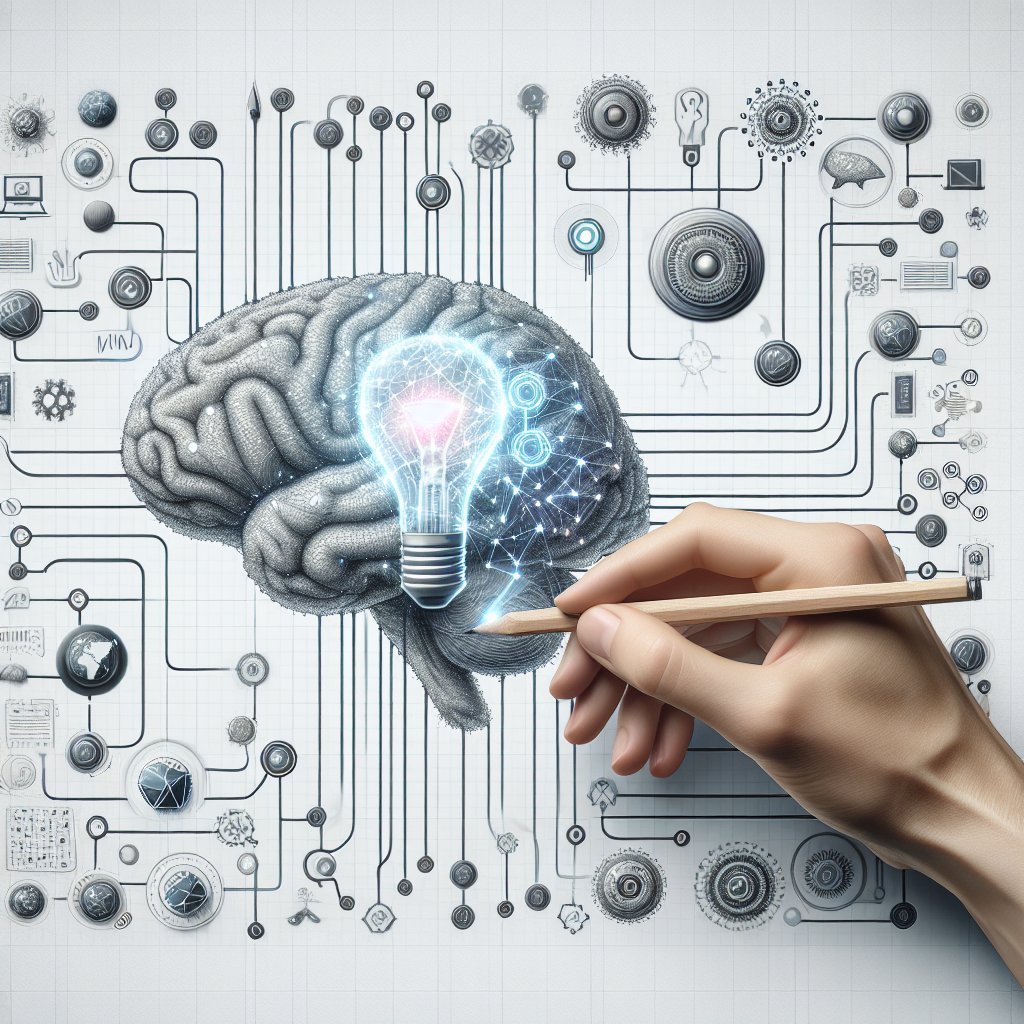
AI-powered brainstorming tools are redefining how individuals and teams generate, refine, and select ideas across industries. By combining natural language processing, machine learning, and data-driven insights, these platforms accelerate creativity, reduce cognitive bias, and turn vague concepts into actionable plans. Instead of staring at a blank page or relying on the loudest voice in a meeting, users can now collaborate with intelligent systems that suggest angles, challenge assumptions, and structure thinking in real time.
One of the most significant transformations comes from the shift from passive inspiration to active co-creation. Traditional brainstorming often depends on mood, group dynamics, and time constraints. AI assistants change this by acting as tireless creative partners. They respond instantly to prompts, expand on partially formed thoughts, and generate multiple variations on themes, headlines, product names, or campaign concepts. This constant flow of options prevents creative blocks and encourages divergent thinking, which is essential in the early stages of idea generation. Teams can quickly explore “what-if” scenarios and push beyond the first obvious solution.
These tools also improve the quality and relevance of ideas by grounding creativity in data. Instead of relying solely on intuition, AI-powered platforms can analyze search trends, social media conversations, industry reports, and user feedback to surface opportunities and gaps. For marketers, this might mean identifying under-served keyword clusters or emerging audience interests. For product teams, it could reveal frequent user pain points or feature requests hidden in support tickets and reviews. When brainstorming is informed by real-world behavior, the resulting ideas are more likely to resonate with target audiences and perform well in the market.
Context-awareness is another core advantage. Modern AI brainstorming tools can be trained on company-specific documents, style guides, brand voice rules, and knowledge bases. As a result, they generate ideas that feel on-brand and aligned with strategic goals rather than generic or off-topic. A content team can ask for blog post angles tailored to a specific buyer persona; a startup founder can request pitch deck storylines aligned with investor expectations; a UX team can explore feature concepts consistent with existing design principles. This alignment cuts down on rework and ensures that creative output supports broader objectives.
AI also helps structure and prioritize ideas, not just generate them. Once a large pool of concepts emerges, tools can cluster related suggestions, identify themes, and rate options against chosen criteria such as originality, feasibility, impact, or cost. Some platforms provide decision matrices, scoring systems, or visual maps that make it easier to compare directions at a glance. This combination of divergent and convergent thinking within a single environment reduces the common problem of having many ideas but no clear path forward. It supports more objective decision-making and keeps teams focused on outcomes.
Collaboration benefits significantly from AI-assisted brainstorming. Remote and hybrid teams often struggle with uneven participation and coordination challenges across time zones. AI brainstorming spaces allow asynchronous contribution, where each participant can feed prompts, questions, or partial ideas into a shared workspace. The system then synthesizes input, suggests connections, and keeps a record of how concepts evolved. This process amplifies quieter voices, mitigates dominance by a few individuals, and preserves a transparent trail of ideation that can be revisited and improved over time. The result is a more inclusive and traceable creative process.
Speed and scalability are critical SEO and content marketing advantages. AI tools can generate outlines, title options, content briefs, and keyword variations in seconds, enabling teams to respond quickly to trending topics and algorithm updates. When combined with SEO research features—such as competitor analysis, search intent classification, and content gap identification—these systems support a continuous pipeline of optimized ideas for blogs, landing pages, videos, podcasts, and social posts. Consistency in publishing becomes easier to maintain without sacrificing relevance or depth.
Despite their strengths, AI brainstorming tools are most effective when paired with human judgment and domain expertise. Algorithms excel at pattern recognition, language generation, and large-scale data synthesis, but they lack lived experience, nuanced ethical reasoning, and contextual sensitivity. Human creators must evaluate suggestions, filter out clichés, and refine outputs into narratives that reflect authentic values and insights. The best workflows treat AI as a catalyst rather than a replacement: humans set direction, define constraints, and validate outcomes, while AI handles volume, variation, and structural support.
Ethical and privacy considerations also shape how organizations adopt AI brainstorming solutions. Feeding proprietary information, customer data, or sensitive internal strategies into external tools requires clear governance. Teams should review each provider’s data retention policies, security certifications, and model training practices to avoid unintended exposure of intellectual property. Establishing guidelines on what can and cannot be shared, and ensuring that generated content is fact-checked and free from harmful bias, helps maintain trust with audiences and stakeholders.
To maximize the impact of AI-powered brainstorming, teams can incorporate a few best practices into their workflows. First, crafting precise prompts dramatically improves output quality; including objectives, audience details, constraints, and examples gives the system a clear creative brief. Second, iterative prompting—asking follow-up questions, requesting alternatives, and refining directions—turns a single interaction into a full dialogue that deepens the level of originality and usefulness. Third, integrating AI tools into existing platforms, such as project management systems, documentation hubs, or design tools, keeps ideation close to execution and reduces friction.
Over time, organizations that systematically use AI for brainstorming develop richer idea repositories and institutional memory. Every session can be stored, tagged, and referenced, creating a searchable archive of past explorations, rejected concepts, and partial solutions. Future teams can mine this knowledge base, feeding past outputs back into AI systems to generate updated or combined ideas. This compounding effect accelerates innovation, shortens learning curves for new employees, and prevents the repetition of earlier mistakes.
In sectors ranging from marketing and product development to education, research, and entertainment, AI-powered brainstorming is moving from experimental novelty to everyday infrastructure. As models improve, integrate multimodal inputs like images, audio, and data visualizations, and become more customizable, their role as collaborative creative engines will continue to expand. Organizations that learn to balance algorithmic assistance with human insight will be best positioned to generate original, impactful ideas at the speed and scale demanded by modern digital environments.